How the LeStallion Personal Journal Notebook Can Transform Your Daily Routine
A Notebook That Does More Than Sit on a Shelf
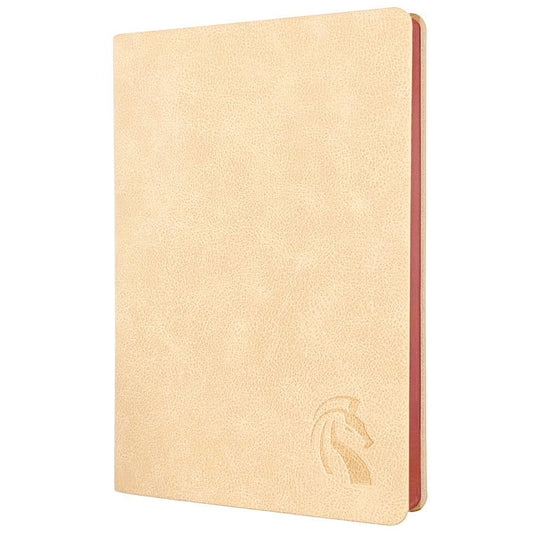
For years, I bought nice-looking journals, filled the first few pages with big plans, and then left them to gather dust. The problem was never a lack of ambition. It was that most notebooks treat writing as a chore instead of a tool. They give you blank pages and a pat on the back, but no real structure to keep you coming back. That changed when I picked up the LeStallion personal journal notebook. It was not just another pretty cover. It was designed with the kind of thoughtfulness that makes you want to write every day, not because you have to, but because it actually helps you get things done.
What makes this notebook different is how it blends the freedom of a blank page with just enough guidance to keep you productive. It does not force you into a rigid system. Instead, it offers a framework that adapts to how your mind works. For someone like me, who juggles multiple projects and a busy schedule, that flexibility is a game-saver. I have tried bullet journals, fancy planners, and digital apps. Nothing stuck until I found a tool that respected my need for both structure and spontaneity.
Why Most Journals Fail at Productivity
Most journals on the market fall into two camps. The first is the empty notebook, which gives you total freedom but leaves you staring at a white page wondering where to start. The second is the hyper-structured planner, which tells you exactly what to write every hour but feels suffocating when life does not fit into neat little boxes. Neither works well for long-term productivity because they ignore the real reason people stop using them: they do not adapt to changing priorities.
When you use a standard lined notebook, you have to invent your own system. That is fine if you are a seasoned journaler. But for the rest of us, it is a barrier. You spend more time deciding how to organize your entries than actually writing them. On the other hand, a strict planner can make you feel like a failure when you skip a day or need to shift tasks around. The LeStallion personal journal notebook solves this by providing a structure that is firm enough to guide you but soft enough to let you breathe.
The Design Philosophy Behind a Productive Journal
What struck me first about this notebook was the layout. It is not a typical five-minute diary or a weekly spread. The pages are divided into sections that encourage specific types of thinking: a space for daily priorities, a section for free-form notes, and a dedicated area for reflection. This separation helps you switch between planning, doing, and reviewing without feeling like you are mixing apples and oranges.

For example, I use the priority section every morning to list my top three tasks. That simple act forces me to decide what really matters before the day gets noisy. The note-taking area catches everything else: meeting notes, random ideas, phone numbers. And the reflection corner at the end of the week lets me look back at what worked and what did not. That weekly review has been the single biggest driver of my productivity growth. Without it, I would just keep repeating the same mistakes.
The paper quality also matters more than I expected. It is thick enough to handle fountain pens without bleeding through, which is rare for a journal at this price point. The binding lies flat when open, so you can write comfortably at any angle. Small details, but they add up. When a notebook feels good in your hands, you reach for it more often.
Practical Examples from Real Use
Let me walk you through a typical week with the LeStallion personal journal notebook. Monday morning, I open to the current week and write down my top three goals for the day. One of them is always a deep-work task, something that moves a major project forward. The other two are smaller but necessary. I keep the list short because I know from experience that longer lists just get abandoned.
As the day goes on, ideas pop up. A colleague suggests a new approach for a client pitch. I jot it down in the notes section without breaking my concentration. Later, when I review the week, that note might become a priority for the next week. This is where the journal shines: it captures the chaos of daily work and then helps you sort it into order.
By Friday, I flip to the reflection area. I ask myself three questions: What went well? What could I have done better? What is one thing I learned this week? Writing those answers takes maybe five minutes, but it has saved me hours of wasted effort. I have stopped chasing low-value tasks and started focusing on what actually moves the needle.
Trade-Offs and Honest Advice
No tool is perfect, and the LeStallion personal journal notebook has its limits. If you need a digital system that syncs across devices, this is not it. It is a physical notebook, and that is both its strength and its weakness. You cannot search it by keyword, and you cannot back it up to the cloud. For some people, that is a dealbreaker. But for me, the act of writing by hand helps me think more clearly. Typing on a screen feels fleeting. Writing in a notebook feels permanent.
Another trade-off is the learning curve. It took me about two weeks to settle into a rhythm that felt natural. At first, I tried to use every section every day, which felt forced. Over time, I learned to use only the parts that served me. The journal is flexible enough to let you customize your approach. That is a feature, not a bug, but it does require a bit of patience upfront.
Who Should Consider This Notebook
If you are a freelancer, a manager, a student, or anyone who needs to juggle multiple responsibilities, this notebook can help. It works best for people who already know they want to be more productive but struggle with consistency. It is not a magic fix. You still have to do the work. But it makes the work easier by giving you a clear path forward.
- Freelancers can use it to manage client projects and deadlines without mixing them up.
- Managers can track team priorities and personal development in one place.
- Students can combine lecture notes with study plans and weekly reviews.
I have also recommended it to friends who are writers and artists. They use the note-taking section for brainstorming and the reflection area to track creative progress. The structure does not stifle creativity. It actually frees up mental space so you can focus on the creative work itself.
Building a Lasting Habit
The real value of this notebook is not in its pages or its layout. It is in the habit it helps you build. Writing things down forces you to think clearly. Reviewing what you wrote helps you learn from experience. Over time, that cycle turns into a powerful tool for personal growth. I have been using the LeStallion personal journal notebook for six months now, and I can honestly say it has changed how I approach my work and my life.

I no longer wake up feeling overwhelmed. I wake up with a plan. And when the day throws surprises at me, I have a place to put them so they do not derail everything else. That sense of control is what productivity really means. It is not about doing more. It is about doing what matters, and doing it well.
If you are on the fence, try it for a month. Give yourself time to adapt. See if the weekly review changes how you think about your priorities. For me, it was the single best investment in my productivity I have ever made.